jarvis@xinnuomachine.com
In sandwich panel manufacturing, the selection of the core material is paramount, as it directly determines the panel's thermal insulation, fire resistance, sound absorption, and structural performance. The main core materials widely used today include EPS (Expanded Polystyrene), Rock Wool (also known as Mineral Wool), and PU/PIR (Polyurethane/Polyisocyanurate). Each material presents unique advantages and disadvantages, making them suitable for different application scenarios.
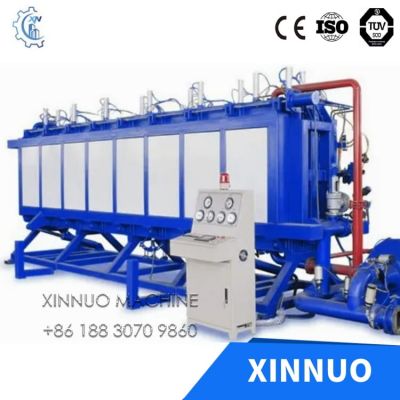
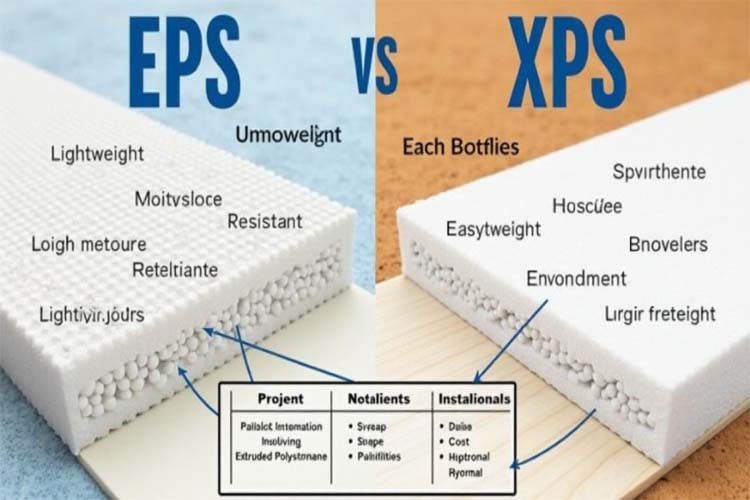
Expanded Polystyrene (EPS) is a popular thermoplastic foam composed of closed-cell beads filled with air, making it incredibly lightweight and an excellent thermal insulator. It's widely recognized for its versatility and cost-effectiveness in construction. As a core material, EPS forms the heart of EPS sandwich panels and EPS wall panels, offering a highly efficient solution for thermal envelopes. Its ease of handling and processing, often starting from an EPS block molding machine, contributes to rapid construction times, making it a go-to choice where balancing budget and performance is key.
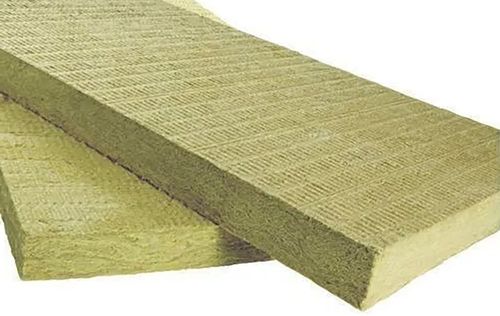
Rock Wool, also known as Mineral Wool, is an inorganic fibrous insulation material derived from melting natural basalt rock and other minerals at high temperatures. Its unique interwoven fiber structure provides outstanding thermal insulation, but it truly excels in its A-class non-combustible fire resistance and superior sound-absorbing properties. When integrated into Rock wool sandwich panels or mineral wool sandwich panels, it forms a robust barrier against fire and noise, making it indispensable for industrial buildings, fire-rated partitions, and spaces requiring excellent acoustic performance within a sandwich panel production line.
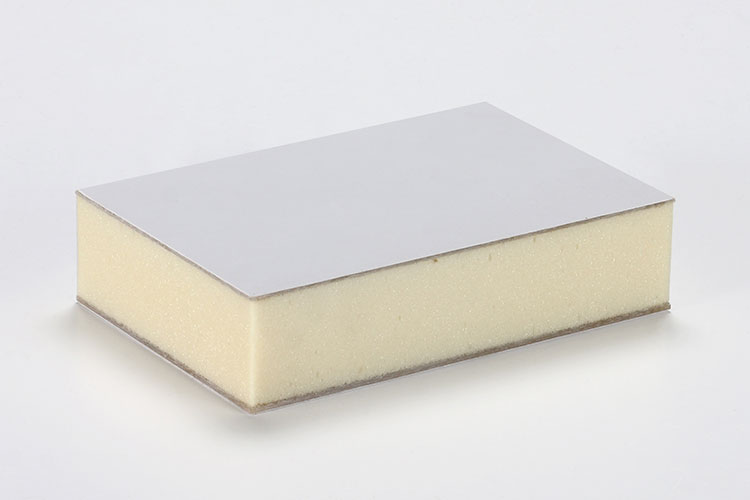
Polyurethane (PU) and its enhanced derivative, Polyisocyanurate (PIR), are organic polymer foams known for offering the highest thermal insulation performance among common core materials. Formed through a sophisticated chemical reaction, their dense closed-cell structure provides exceptional thermal resistance, high compressive strength, and excellent moisture impermeability. PU sandwich panels and especially PIR sandwich panels are favored in demanding applications like cold rooms, cleanrooms, and high-performance building envelopes where maximizing energy efficiency and achieving specific fire safety characteristics (PIR's enhanced fire performance) are critical.
Summary:
The choice of core material for sandwich panels largely depends on the specific project requirements and budget:
1. For budget-conscious projects that prioritize good thermal insulation and lightweight properties, and where fire safety requirements are moderate, EPS is an economical and effective option.
2. When superior fire resistance (A-class non-combustibility) and excellent sound insulation are paramount, Rock Wool is the preferred choice, despite its higher density.
3. For ultimate thermal insulation performance, high strength, and superior moisture resistance, where the budget allows, PU/PIR panels offer the most advanced solution, with PIR providing enhanced fire performance compared to standard PU.
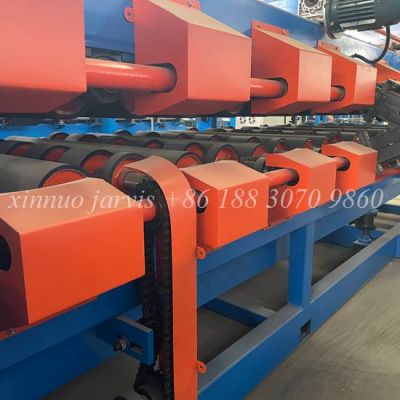
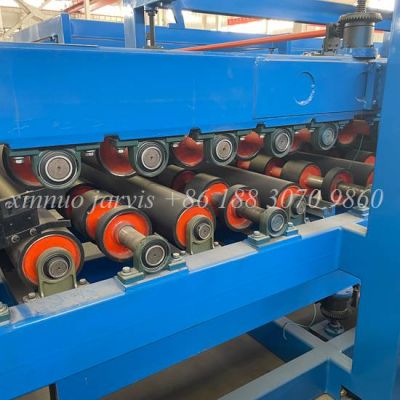
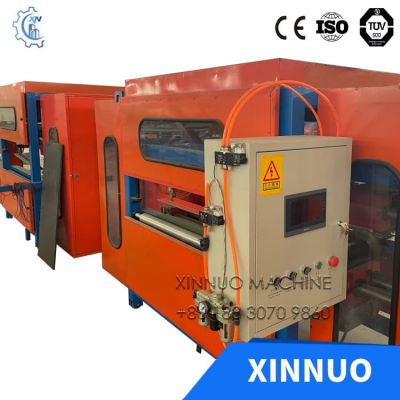
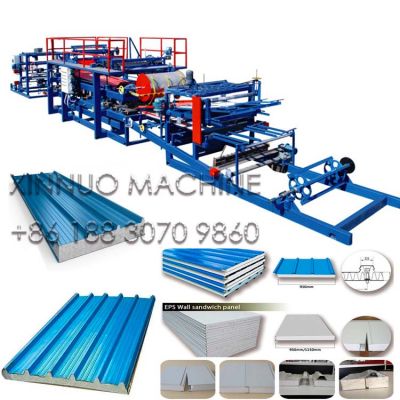
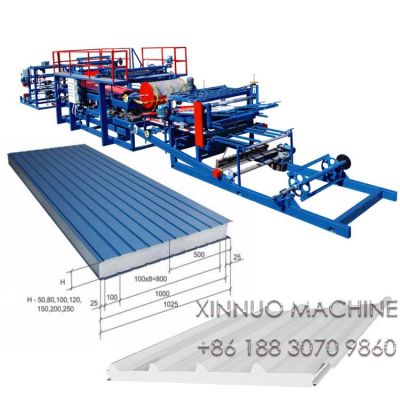
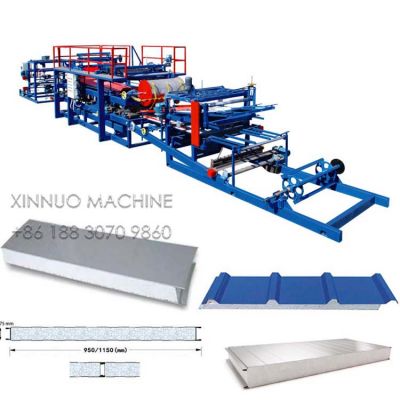
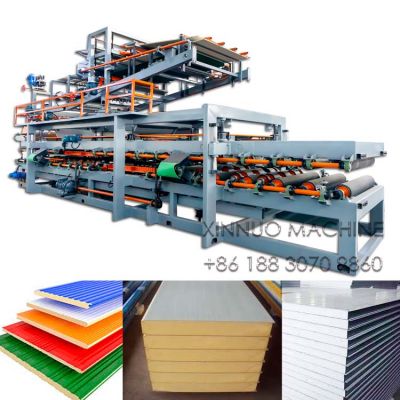
Xinnuo, as a specialized manufacturer of cold roll forming machinery, provides advanced production lines capable of processing and producing various types of sandwich panels, including those with EPS, Rock Wool, and PU/PIR cores. We offer the machinery solutions to ensure your production efficiency and product quality regardless of your chosen core material.
Xinnuo Machinery Co., Ltd., established in 1995, is a subsidiary of Hebei Xinnuo Roll Forming Machine Co., Ltd., previously known as Botou Huayu Roll Forming Machine Factory. We focus on the design, manufacturing, and sales of cold-formed machinery, offering a broad range of high-performance equipment.
Our star product, the sandwich panel production line, is one of our most popular machines and has been exported to countries across the globe. Renowned for its high efficiency and versatility, this machine is key in the production of insulated panels used in various industries. Our commitment to innovation is reflected in the over ten patents we hold, and our recognition as a National High-Tech Enterprise further solidifies our reputation as an industry leader.
[ read more ]